
Continuous Glucose Monitoring (CGM)
A device used for monitoring blood glucoseContinuous Glucose Monitoring (CGM)
A device used for monitoring blood glucose
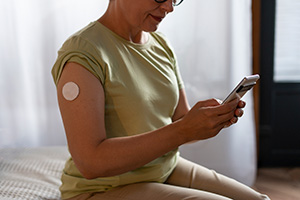
A continuous glucose monitor (CGM) is a device used for monitoring blood glucose on a continual basis instead of monitoring glucose levels periodically by drawing a drop of blood from a finger. This is known as continuous glucose monitoring. CGMs are used by people who treat their diabetes with insulin, for example people with type 1 diabetes, type 2 diabetes, or other types of diabetes, such as gestational diabetes.
Frequently Asked Questions
Why do I need EEG?There are many different reasons why we may need to measure the electrical activity in our brains. Some of them include Clinical treatment and diagnosis of many common and debilitating brain disorders such as epilepsy, autism, Parkinson's disease, chronic pain, and depression, which have been correlated with changes in EEG activity. The ability to detect EEG activity has been combined with real-time feedback, allowing subjects to learn how to control their brain states voluntarily. This technique has been used in a variety of applications, including relaxation training and skill acquisition. EEG signals can be used to detect patterns of electrical activity linked to different thoughts or intentions.
"Electroencephalography (EEG) records electrical activity along the scalp. It measures voltage fluctuations resulting from ionic current within the neurons of the brain." In a conventional EEG, electrodes are placed along the scalp to measure this electrical activity using an electroencephalogram machine. The recorded signal is very similar to that of a baby monitor. The signal is transmitted to an electroencephalograph machine, which records the data on paper or a digital screen.